Free on Kindle — Monday 6 & Tuesday 7 July only (Amazon.co.uk). Download it free →

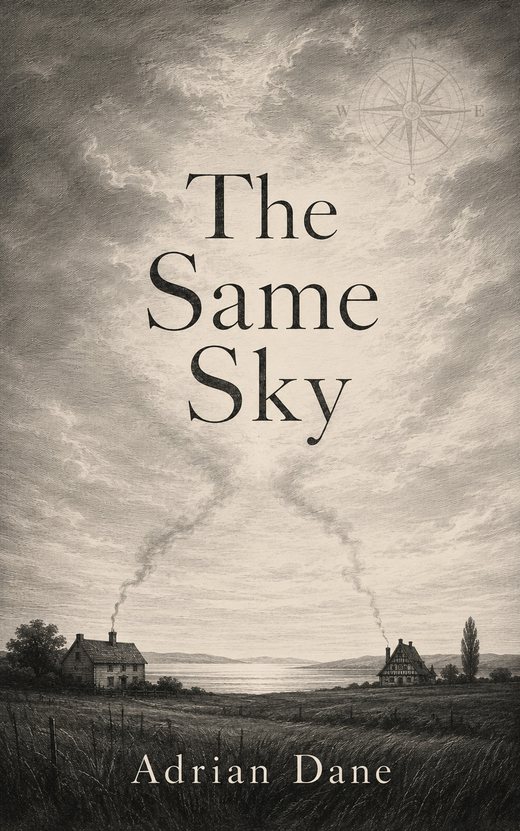
A novel by Adrian Dane

The Same Sky

Two families. Two wars. One sky.

Scroll

The Story

November 1916. A German airship falls in flames towards the Essex marshes. The Englishman who shot it down lifts a brass compass out of the mud — and reads the name engraved on the back.


The Hoffmanns keep an instrument-maker's workshop on a German lake. The Hartleys keep a boatyard on a Kent shingle. Both families want exactly the same things — a warm kitchen, a full table, the boy home safe — and twice the century sets them against each other: the fathers over one war's cold North Sea, and a generation later their sons in the same summer sky over Kent.

Between the two houses pass a compass and a water-stained diary, carried back and forth across the Channel for sixty years. And in the present day a sleepless new mother, clearing her late grandmother's house alone, opens a rose-printed biscuit tin — and finds a stranger's name where her family's story should be.

The Same Sky is a sweeping yet intimate saga of the wars that families fight from their own kitchens: of mothers who count bicycles in the street, fathers who fall silent, sons who fly, and the ordinary, identical love that great nations teach themselves to bomb. It asks the question every family closes a drawer on — why do we keep the things we cannot bear to look at?

For readers of All the Light We Cannot See, Birdsong, The Nightingale and The Book Thief.

“Two households who wanted exactly the same things — a warm kitchen, a full table, the boy home safe — and who were taught to bomb each other anyway.”
The Same Sky
The Truth Behind the Story

The history is real. Only the families are invented.

The Same Sky is fiction built on a documented record. Here is the real history the novel is woven through — the events, the dates, the ordinary experience of a generation. No spoilers: each note shows only where a thread begins.

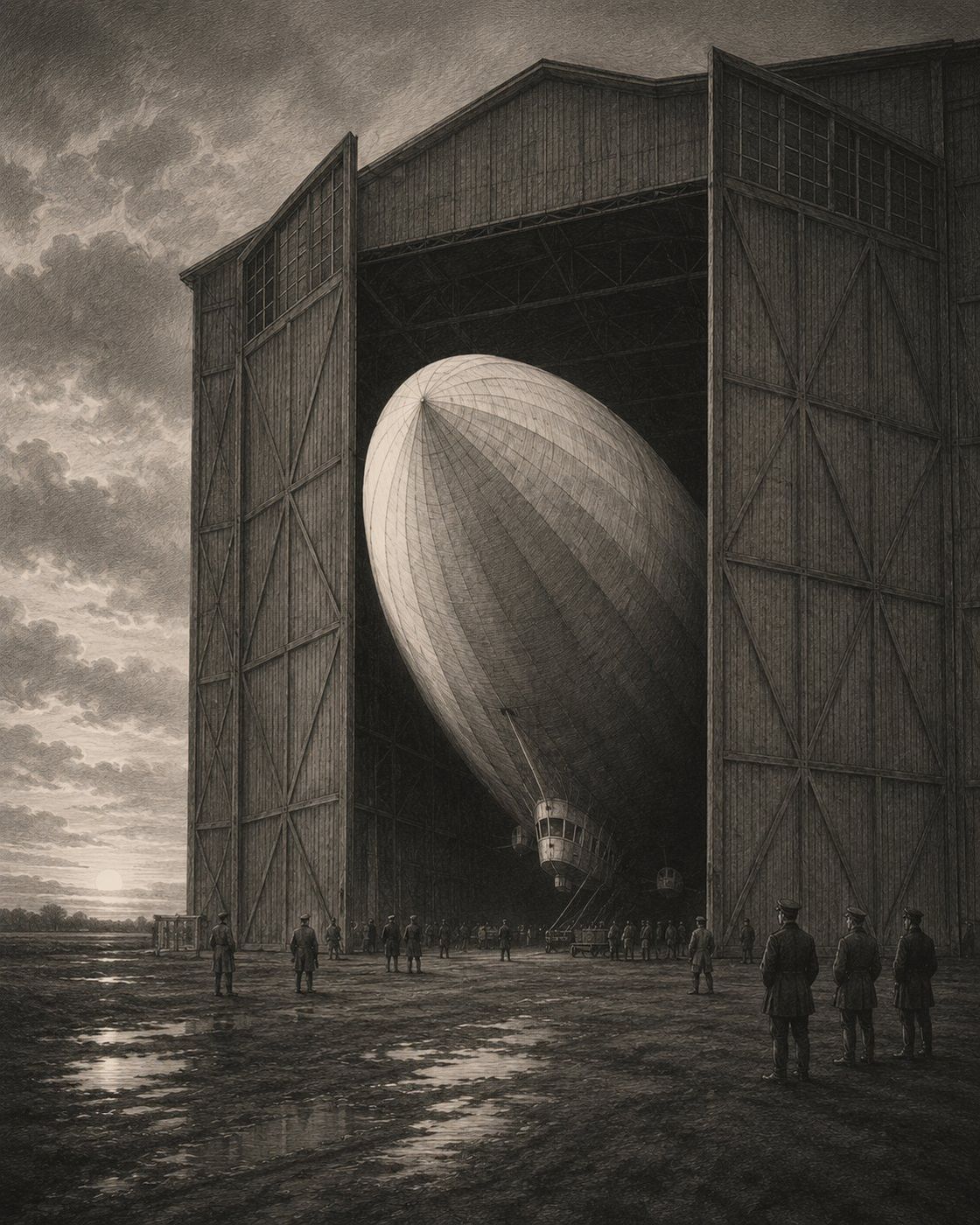
A charcoal illustration of an airship above a coastline at night.

Easter egg · the skyThe same sky over two coasts.

1915–1916 · The Zeppelin raids

Death from a clear sky

From January 1915, German airships crossed the North Sea to bomb British towns — the first sustained aerial bombardment of civilians in history. Under the naval airship commander Peter Strasser, Zeppelins droned over London and the east coast on clear, moonless nights. Over the war, airship raids killed more than five hundred people in Britain and injured well over a thousand — a new and deliberate terror aimed at ordinary streets far from any front.

In the novelThe fathers' war begins in the air above the North Sea — one family building instruments on a German lake, another watching the horizon from a Kent shore.
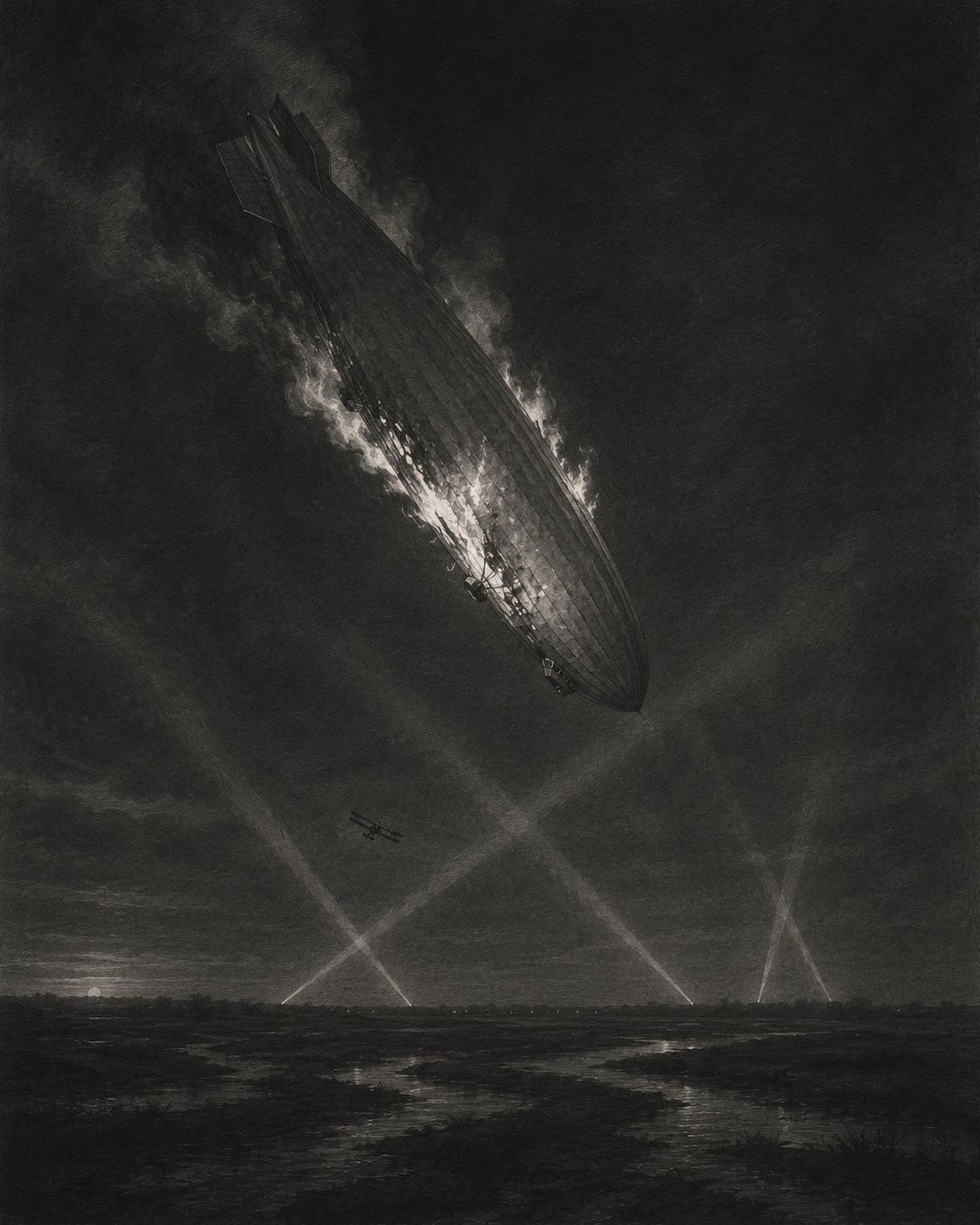
A charcoal illustration of an airship falling in flames.

Easter egg · the flareA whole county looked up.

2–3 September 1916 · Cuffley

The first airship down

On the night of 2–3 September 1916, Lieutenant William Leefe Robinson climbed his aeroplane above the wooden-framed airship SL 11 and set it alight with the new incendiary ammunition. It fell in flames near Cuffley in Hertfordshire, watched by crowds across London who cheered from their gardens. Robinson was awarded the Victoria Cross. It was the first German airship destroyed over British soil — and it changed how the war in the air was fought.

In the novelAn airship comes down over the marshes, and an Englishman lifts something out of the mud with a German name on it.

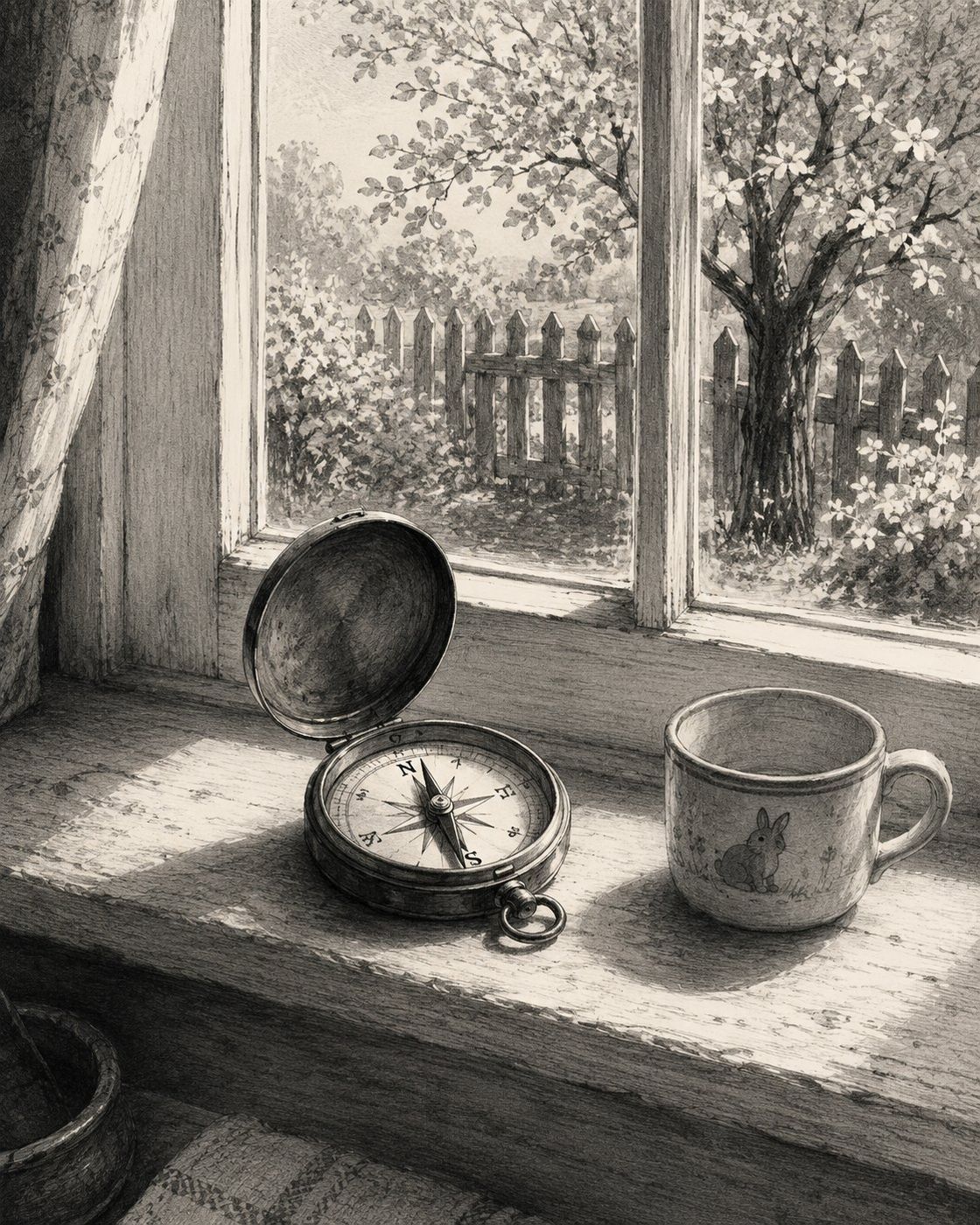
A charcoal illustration of a brass compass.

Easter egg · the compass“It keeps its word.”

The home front · souvenirs of war

A name in the wreckage

Whenever an airship or aircraft came down, crowds descended on the wreck. People took special trains to the crash sites; the twisted frames were stripped for souvenirs — fabric, wire, a scrap of the girders. Relic-hunting was a real and widespread feature of the home front, a way of holding a piece of an enormous, frightening thing in your own hand.

In the novelOne relic refuses to stay a souvenir. It has a name; and a name, sooner or later, has an owner.

A charcoal illustration of an instrument-maker's workshop.

Easter egg · the workbenchBrass, glass and patience.

Friedrichshafen · Lake Constance

The lake that built airships

Count Ferdinand von Zeppelin built his first airships at Friedrichshafen on Lake Constance (the Bodensee) from 1900, turning a quiet lakeside town into the heart of the airship industry, alongside the Maybach engine works. The same expertise that made instruments and engines in peacetime made war machines in wartime — which is exactly why, a generation later, Allied bombers would come for the town itself.

In the novelThe Hoffmanns make delicate, honest instruments on the lake — the kind of skill a country reaches for when it decides to build something far less honest.

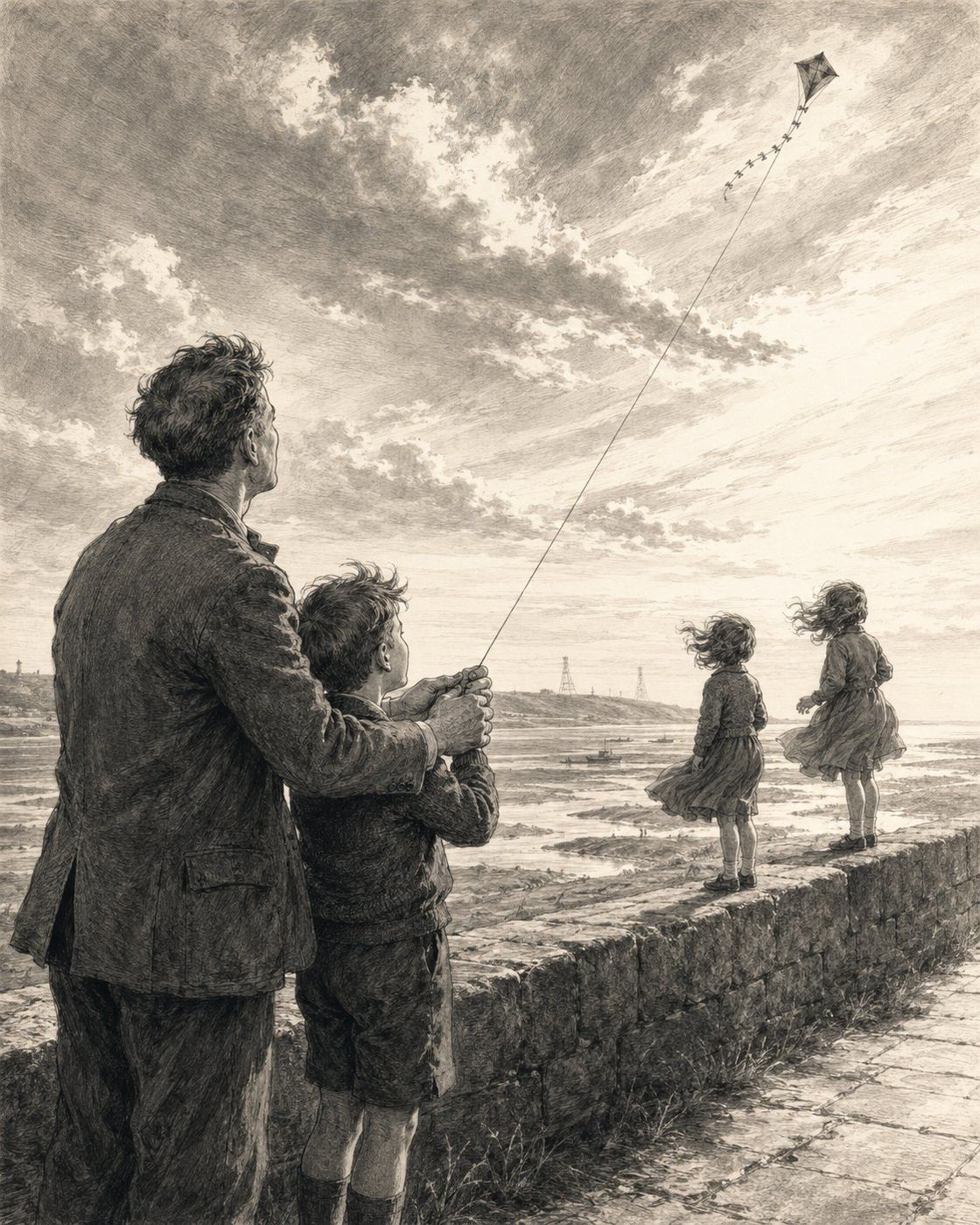
A charcoal illustration of a boy flying a kite by the sea wall.

Easter egg · the kiteBefore they flew for real.

Summer 1940 · the Battle of Britain

The same sky, a generation on

Between July and October 1940, RAF Fighter Command — Spitfires and Hurricanes flown by regulars and citizen-airmen of the Volunteer Reserve alike — met the Luftwaffe's Messerschmitt Bf 109s over southern England. Kent was the front line: the ground crews called the coast around Dover “Hell Fire Corner,” and children on the shingle watched the vapour trails knot and unravel directly overhead.

In the novelThe sons of 1916's enemies climb into the same summer sky over the same Kent coast — and neither knows the other is there.

A charcoal illustration of a wartime kitchen.

Easter egg · the ration bookPoints, not money.

1939–1945 · the home front, both nations

The war fought from the kitchen

Both countries rationed their people. Germany introduced ration cards within days of the war beginning in 1939; Britain rationed bacon, butter and sugar from January 1940, and much more besides as the war ground on. On both sides of the Channel the same arithmetic was done at the same kind of table — coupons counted, meals stretched, a child's shoes made to last one more winter.

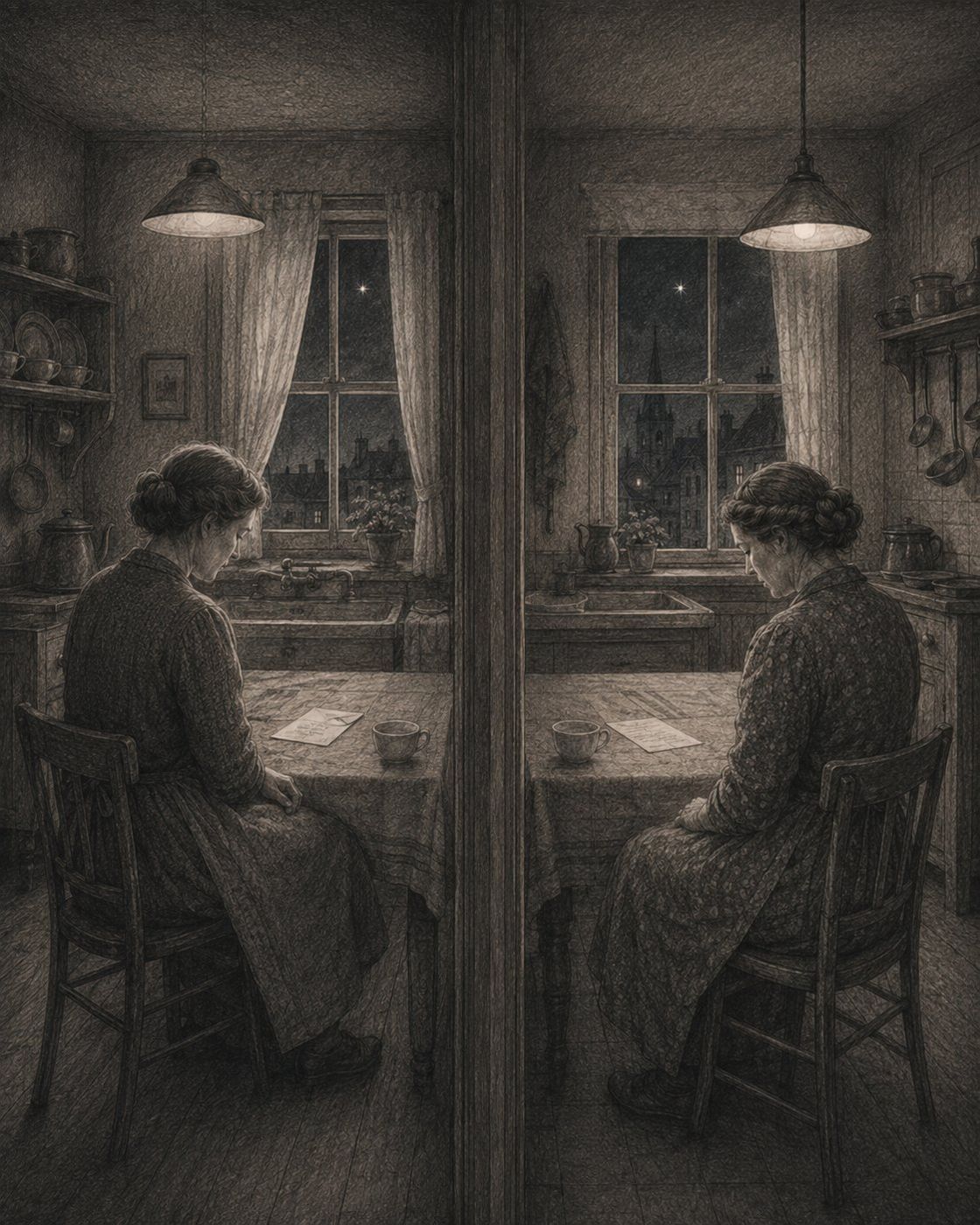
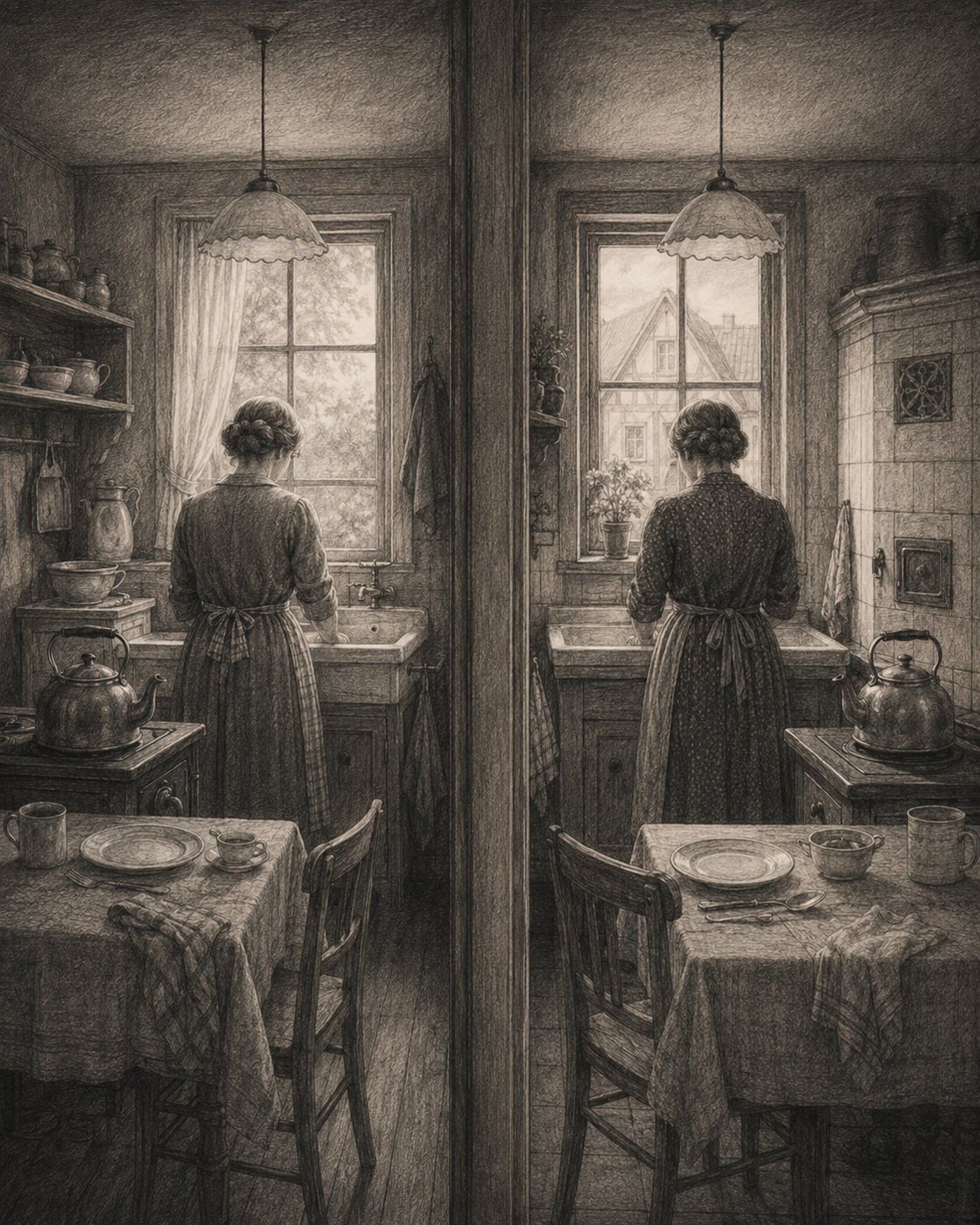
In the novelTwo mothers keep two houses on two sides of a war, doing the identical, invisible sums that keep a family alive.

A charcoal illustration of two women at kitchen tables, mirrored.

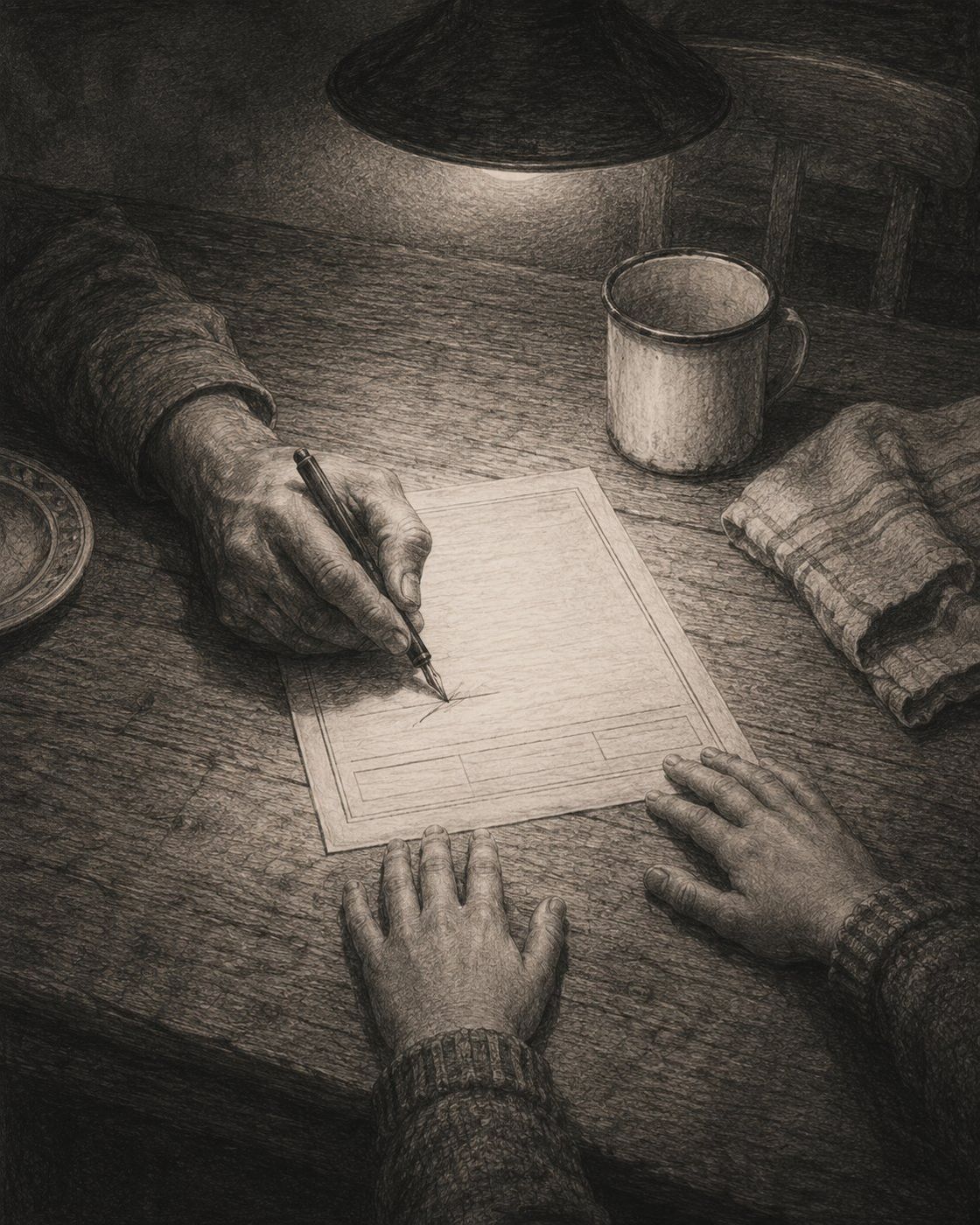
Easter egg · the letterThe same news, in two languages.

1914–1945 · the women's war

The ones who waited, and worked

The women's war was not a lesser war. British women served in the WAAF and the Land Army, drove ambulances, kept watch as ARP wardens and filled the factories; German women worked the farms and the production lines, and after 1945 the Trümmerfrauen cleared their bombed cities by hand, brick by brick. And everywhere, on every street, women learned to read the approach of a telegram boy like a change in the weather.

In the novelThe story is carried as much by the mothers who count bicycles in the street as by the sons who fly — grief in one language is exactly grief in the other.

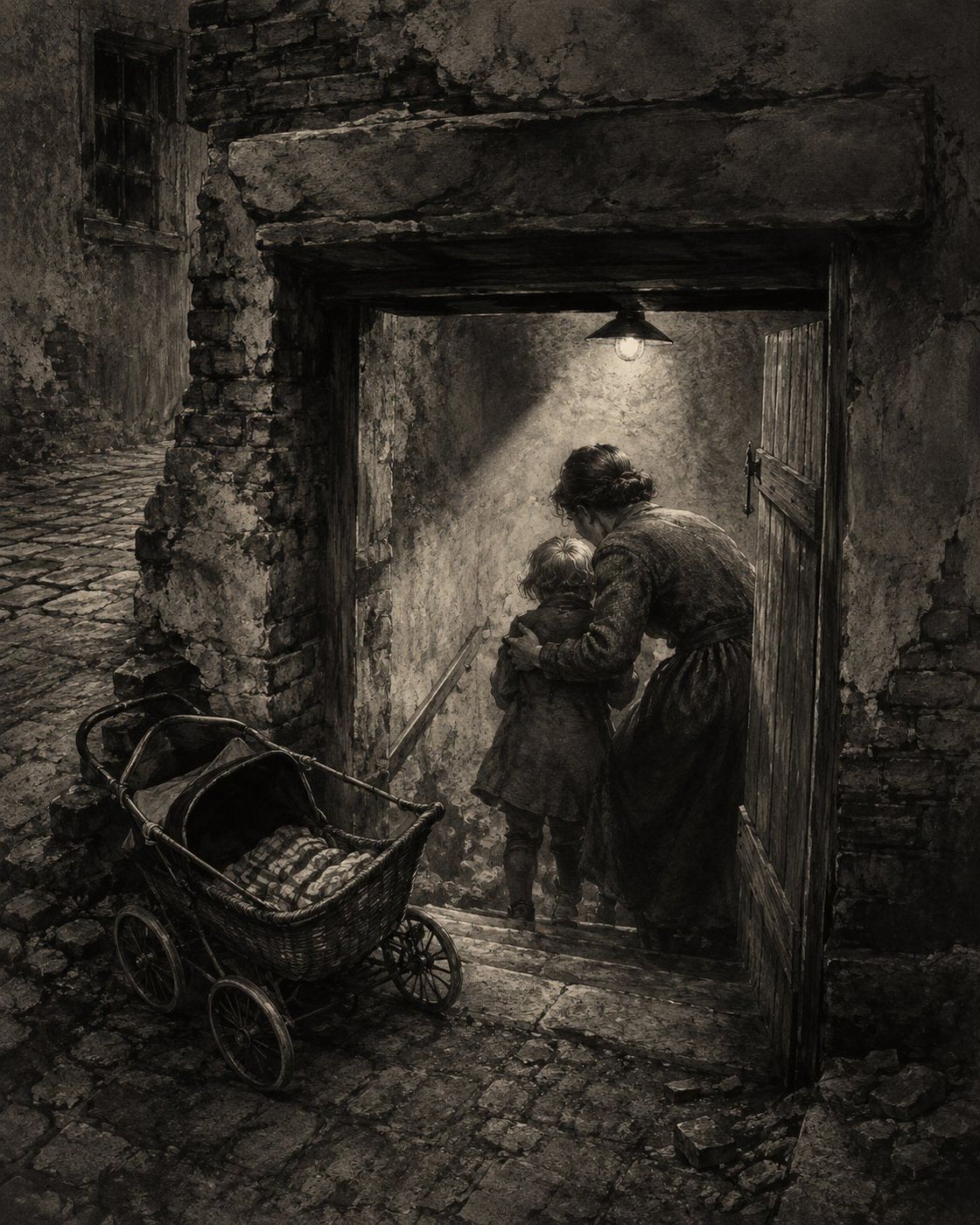
A charcoal illustration of a family sheltering in a cellar.

Easter egg · the cellarWhere a city goes to hide.

24 July – 3 August 1943 · Hamburg

Operation Gomorrah

In late July 1943, RAF Bomber Command by night and the American air forces by day struck Hamburg in a week of concentrated raids. On the night of 27–28 July the fires joined into a firestorm — a self-feeding hurricane of flame that historians estimate killed on the order of 37,000 people (figures range from roughly 34,000 to 43,000) and left about a million homeless. The same weapon that had first fallen on British streets in 1915 now fell on German cities on an unimaginably greater scale.

In the novelThe wheel that began over the Essex marshes comes all the way round — and the book asks its hardest question of the reader, not its characters.

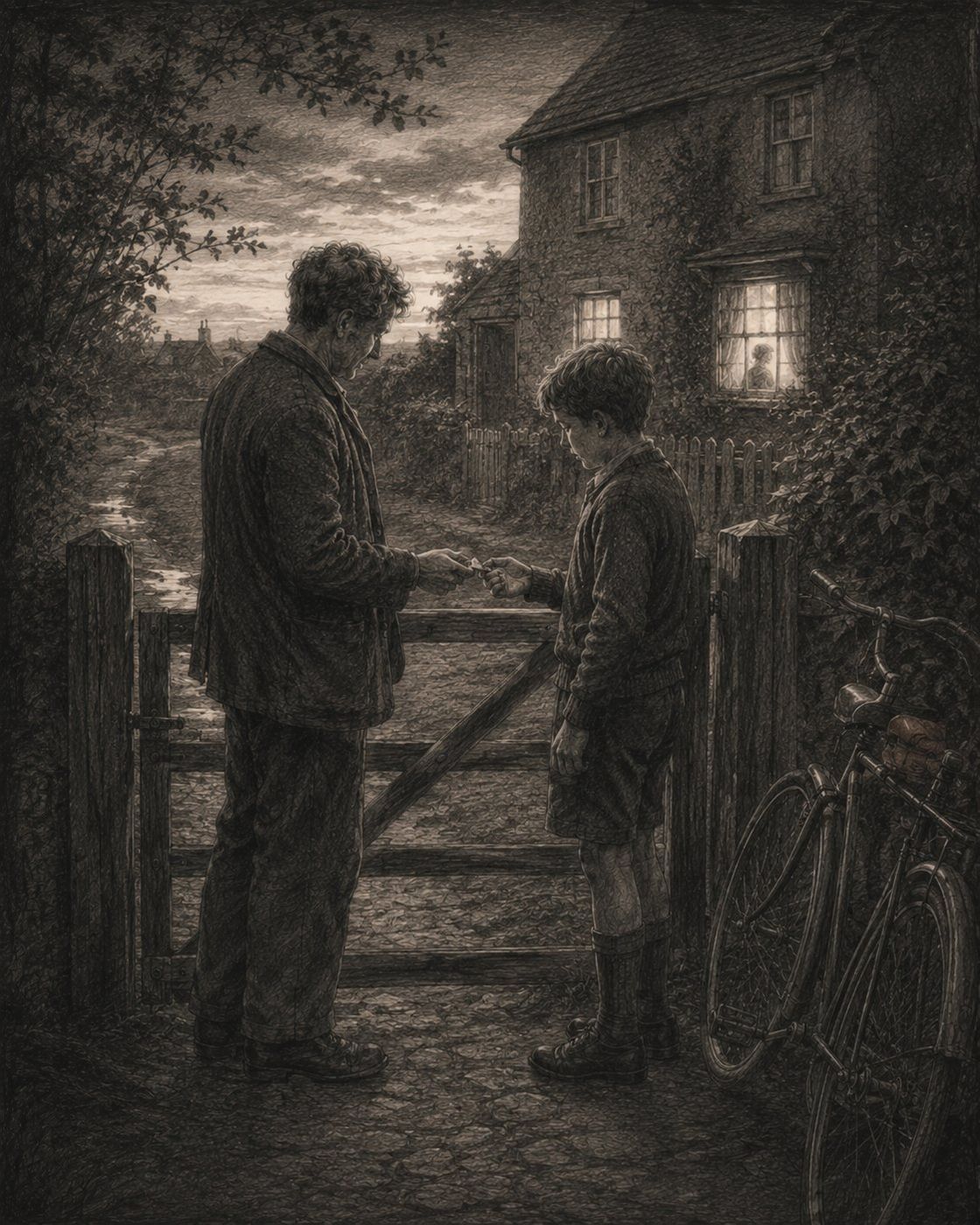
A charcoal illustration of a farewell at a garden gate.

Easter egg · the gateSome things are handed over without a word.

1938 · the year of the crisis

The road to a second war

1938 was the year the shadow returned. During the Munich crisis that September, gas masks were handed out across Britain and trenches were dug in the London parks for a war that was postponed, not cancelled. In Germany, dissent was already dangerous: when Bishop Joannes Baptista Sproll of Rottenburg refused to endorse the regime's plebiscite that year, mobs were sent against him and he was driven from his diocese. Ordinary people, in both countries, felt the ground tilt.

In the novelFathers who survived the first war watch their sons walk toward the second, and learn there are things you can only hand over at a gate, without a word.

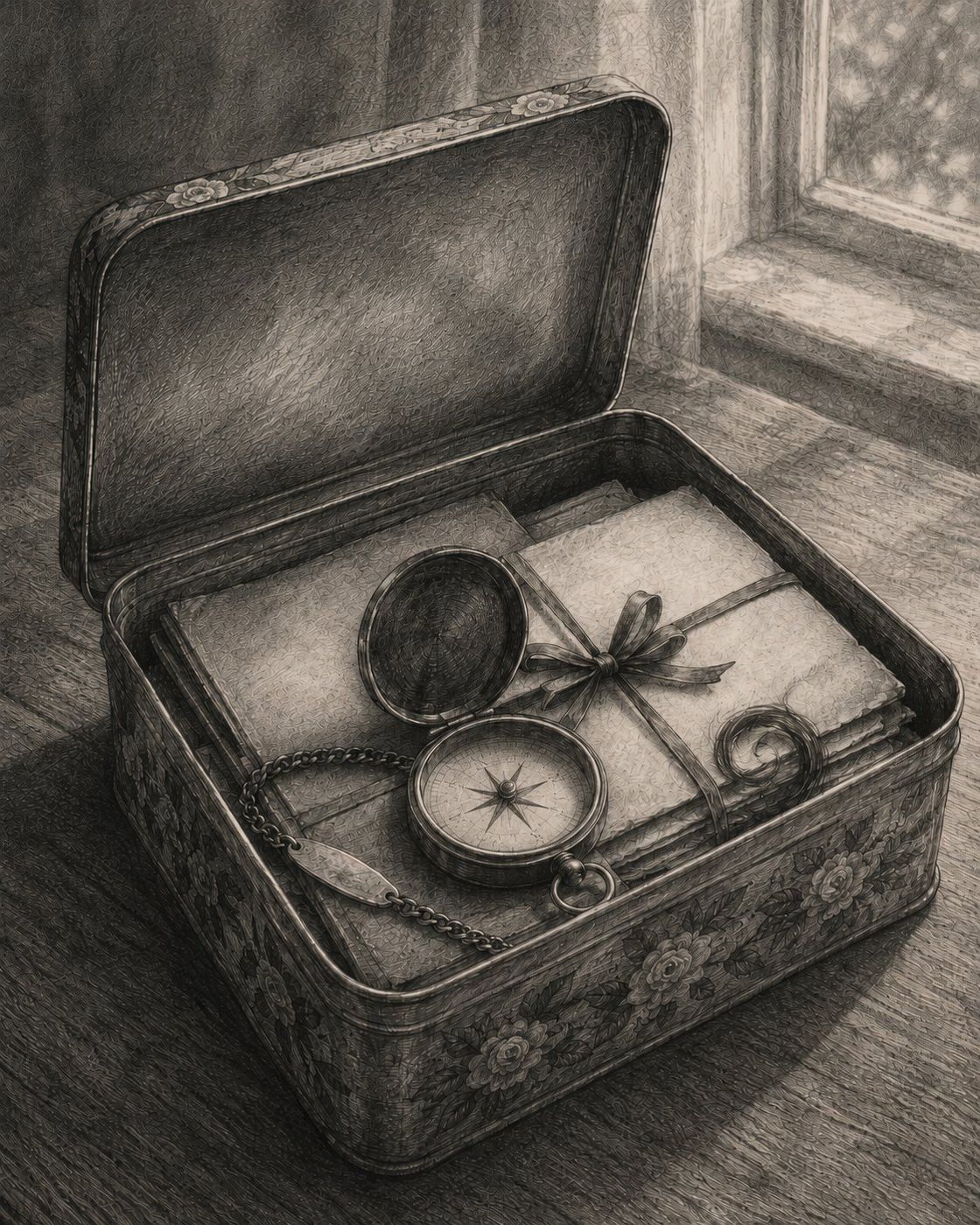
A charcoal illustration of a rose-printed biscuit tin of keepsakes.

Easter egg · the biscuit tinWhat a family keeps, and can't look at.

After 1945 · the men who stayed

The things families keep in a tin

The war did not end cleanly. Hundreds of thousands of German prisoners were still held in Britain after 1945, working the land; repatriation ran on into 1948. From late 1947 the ban on fraternisation was lifted, and former prisoners were at last allowed to marry British women — an estimated 24,000 chose to stay and build their lives here, in the country they had been sent to fight.

In the novelSixty years on, a rose-printed biscuit tin is opened by someone who never knew the war — and finds a stranger's name where her family's story should be.

How the book came about

The ordinary experience of a generation

People sometimes ask whether one family could really live through both World Wars — fathers in the first, their own sons in the second. It was not just possible. It was the common experience of a generation.

A man who fought in 1916 as a young soldier would, by 1940, be an ordinary father in his early fifties — with a son of exactly fighting age. The arithmetic is quiet and unremarkable, and that is the point: the twentieth century took the same families twice.

Born to fight the first war — with sons born to fight the second
BornIn 1916In 1940
188828 — a soldier (the fathers)52 — a father
188927 — a soldier (the fathers)51 — a father
1916born in the year of Cuffley24 — a pilot (the sons)
1920a small child20 — a pilot (the sons)

The families in The Same Sky are invented. The history they live inside is not — every date, every raid, every rationed winter is drawn from the documented record, with real figures observed only from the outside, as history recorded them.

1914–1945

The deadliest half-century in human history

Two world wars and a pandemic fell inside a single lifetime. The scale is almost impossible to hold in the mind — which is why the novel holds it two kitchens at a time.

~20mdeaths in the First World War, military and civilian (historians' estimates)
~50mdeaths in the 1918–20 influenza pandemic (estimates vary widely)
70–85mdeaths in the Second World War (historians' estimates)

Figures are historians' best estimates and are given as ranges; casualty counts for this period are genuinely uncertain and are still debated. The novel's aim is not to sensationalise the numbers but to make a single family's share of them feel real.

Read it

Three editions

Free 6–7 July · Kindle
The Same Sky — cover

Kindle

Free Mon–Tue, then read on any device

Get the eBook →
Paperback
The Same Sky — cover

Paperback

Print edition · 6×9

View on Amazon →
Hardback
The Same Sky — cover

Hardback

Collector's edition

View on Amazon →

Also available on Amazon.com and other Amazon stores worldwide.

About the author

Adrian Dane

Adrian Dane writes across genres — from science fiction to mystery, and now historical fiction — rooted in meticulous research and the small, domestic truths of people caught up in enormous events. The Same Sky grew out of a simple, uncomfortable question: what if the people on the other side of the sky wanted exactly the same things we did?

It is his most ambitious book yet, and he writes about the twentieth century's ordinary lives with as much accuracy as fiction will allow — the history impossible to dispute, the feeling impossible to argue with.